
Why Self-Doubt Shows Up On Stage (And What's Really Happening)

Updated: Apr 29
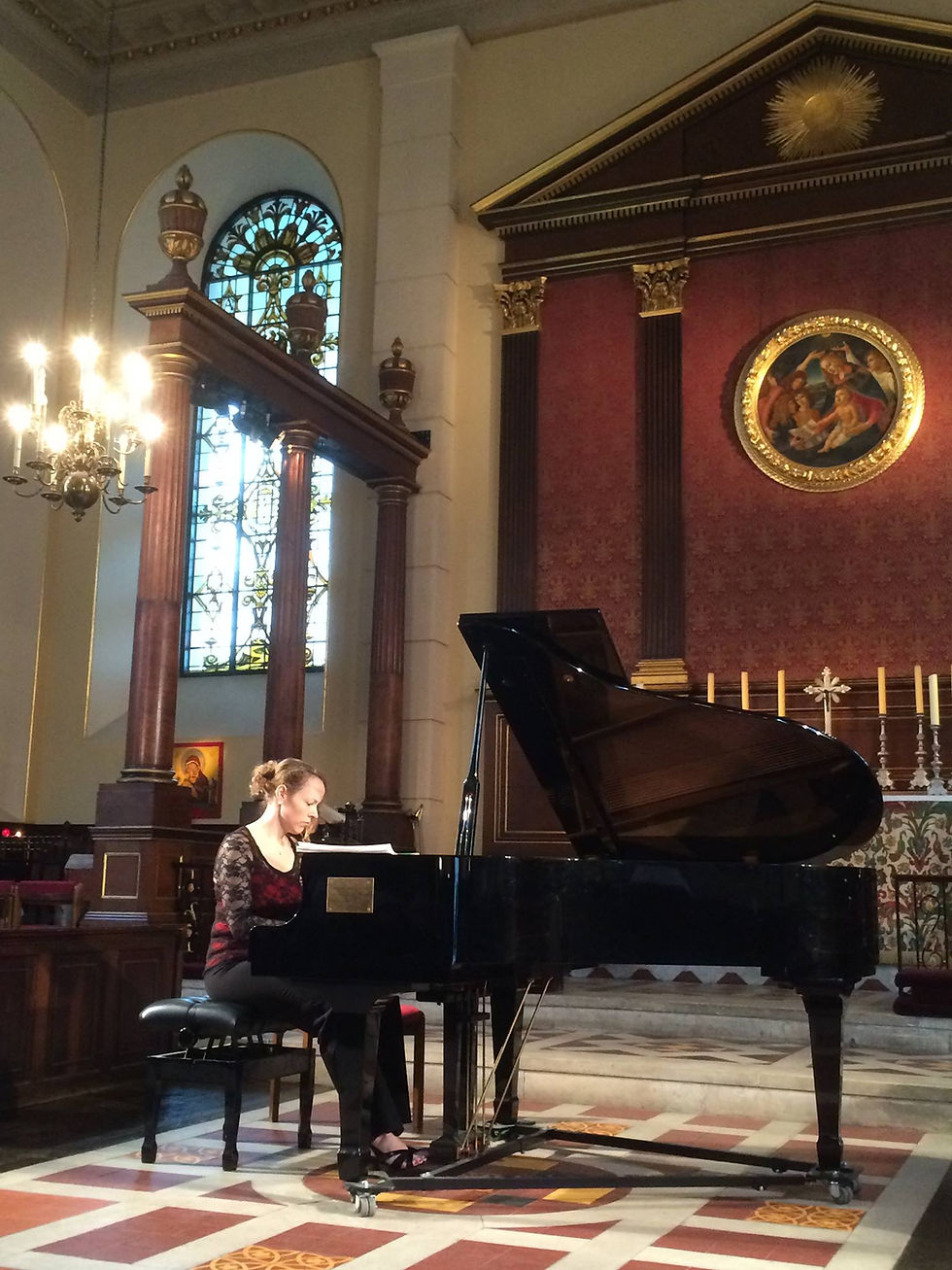
My heart’s pounding inside my chest.
The piano feels unfamiliar — and I’ve locked myself into a precarious speed, caught in a fog of fear.
Disconnected from my body, I can hardly bear to watch as my fingers hammer out rapid cascades of notes like a runaway train.
Panic surges as the delicate thread threatens to unravel beneath my hands.
A deep pain in my chest screams that I’m failing myself.
I worked so hard for this. Why can’t I hold my nerve?
The bitterness of self-doubt floods my thoughts.
I feel ashamed.
For many experienced musicians, performance anxiety doesn’t always show up purely as physical nerves.
Often, it feels more personal — as it was for me.
A quiet but persistent sense of self-doubt — or the feeling that you don’t belong on stage, despite your experience.
For some musicians, this overlaps with imposter-like thoughts — where you question the success you've already earned.
This isn’t a reflection of your ability, or a lack of experience.
It’s a predictable response — one that develops when performance begins to feel tied to your identity.
If you’re not yet sure how this pattern shows up for you under pressure, this short assessment will help you identify what's driving your performance:
How Self-Doubt Shows Up On Stage
In my work with professional musicians, the self-doubt pattern is one of the most common ways performance anxiety shows up.
If this feels like you, I explore this pattern in more depth — including how to stabilise it under pressure — in this guide:
This pattern rarely starts on stage.
It develops over time — through experiences that shape how your mind and body respond to evaluation and the pressure of performance.
At some point along your performing career, playing might stop feeling like something you do, and start to feel like something that reflects who you are.
For many, this happens very early on — often around the time performance outcomes begin to really matter.
This is what I describe as the Pressure–Identity Loop™ — the mechanism that drives performance anxiety in musicians.

When this loop activates:
pressure increases
your sense of identity feels at stake
your nervous system shifts into protection
performance becomes tight, over-controlled, or forced
Self-doubt is not random.
It’s a predictable response within this pattern — often overlapping with fear of judgement and fear of failure.
A Personal Example: Where This Pattern Began
I first recognised this pattern in my own experience during a hypnotherapy session.
I was lying in a quiet room, deeply relaxed but aware, as my therapist guided me back through my experience of performance anxiety.
He asked me to recall a recent performance.
I could feel it immediately — the tightness in my chest, the adrenaline, the sense that something wasn’t stable.
Then he asked me to go further back to the first time I'd ever felt that way.
A memory surfaced.

I was around seven years old, standing in front of my class. We were being asked to sing.
But when it was my turn, I froze. I didn’t want to sing.
I couldn’t sing.
I could feel everyone watching. Waiting.
My teacher became frustrated.
“Sing,” she shouted. “What’s wrong with you?”
I didn't know it then, but in that moment, something had activated deep inside me.
My internal system was responding to being seen, evaluated, and exposed.
Looking back on this experience with the help of the hypnotherapist, I was able to see this wasn’t about my ability.
It was a learned pattern linking performance, evaluation, and identity.
Years later, that same pattern was still activating on stage.
Why Self-Doubt Feels So Real In Performance
Experiences like this don’t stay in the past.
They shape how your nervous system responds in the present.
For many musicians, these patterns don’t just stay internal — they can begin to show up physically, affecting the way you play or sing — and causing tension, shaking, or loss of control.
I share an example of this in a case study of a professional singer whose performance anxiety began to affect his voice:
Over time, your internal system begins to associate:
performance with evaluation
evaluation with threat
visibility with risk
So when you step onto the stage, your response isn’t just about the moment.
It’s shaped by everything your body and brain has learned before.
This is why you can:
feel confident in practice
know you’re capable
prepare thoroughly
…and still experience self-doubt when the stakes rise.
For many musicians, this is an expression of one of the core Performance Pressure Patterns™.
You can explore these in more details here: Explore the 5 Performance Pressure Patterns™.

Why This Isn’t About Confidence Or “Fixing Stage Fright”
It’s easy to assume that self-doubt means something is missing.
More confidence.
More preparation.
More control.
But in most cases, that’s not the issue.
Self-doubt in experienced musicians typically doesn’t come from a lack of ability, underpreparation, or a lack of confidence.
It comes from a shift in your internal state under pressure.
Self-doubt might only become noticeable to you when your confidence starts to waver during a performance.
This is usually the first signal.
You can explore exactly how this works in my confidence guide:
When your nervous system moves into protection, self-trust becomes less accessible:
Your attention turns towards survival
Your thinking becomes more analytical
Your body becomes more tense
The experience becomes personal.
But this isn’t something you need to “fix.”
It’s something you can begin to understand — and work with more precisely.
This is the process I guide musicians through in my work — helping you stabilise your response under pressure at the level where these patterns are formed.
Working With The Pattern At Its Source
Because this pattern operates beneath conscious awareness, surface-level strategies often only go so far.
To create more stable change, you need to work at the level where the pattern is formed.
This is where subconscious approaches — including hypnosis — are highly effective.
For musicians who are ready to begin working with this, Fearless Foundations™ is where we start — helping you interrupt these patterns and stabilise your response under pressure.
Instead of forcing confidence, hypnosis retrains how your body and mind responds under pressure.
If you'd like to explore how this process works in more depth, you can explore my article:
Shifting Your Response To Self-Doubt
The goal isn’t to eliminate self-doubt completely.
It’s to change how your internal system responds to it.
When the underlying pattern begins to shift:
self-doubt becomes less intrusive
your attention returns to the music
your body feels more stable
your performance becomes more consistent
Confidence becomes something that emerges — not something you try to hold onto.
Where To Begin
Understanding your experience is the first step.
If you want to understand what’s shaping your response under pressure — and where to begin stabilising it — you can start here:

Your results will help you understand:
which patterns are most active for you
how they show up in your performance
where to begin working more precisely
From there, you can start working with these patterns more directly — whether through self-guided work or deeper support within a structured pathway.
The perspectives in this article form part of the Fearless Musician Method™ — a structured approach to stabilising performance under pressure.


Comments